Retail
Testers, Samples and Hygiene in a Beauty Store
Testers and free samples are still products under EU cosmetics law, so most need full labels, safe handling rules and a set retirement date once opened.
Sun Care
See all →Haruharu Wonder
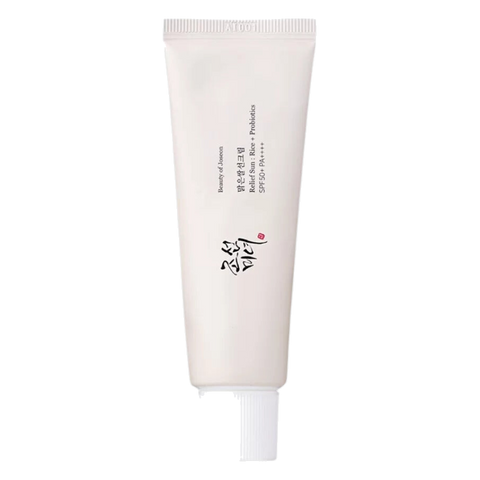
Black Rice Moisture Airyfit Daily Sunscreen SPF50+ PA++++, 50ml
In stock
EAN 8809532221707


A woman came back into a shop three weeks after trying a cream from an open pot on the counter and asked what had been in it, because her cheeks had been sore since. The owner could not tell her when the pot was opened, who opened it, or which batch it came from. The retail label had been peeled off so it would not look like sellable stock, and nothing was written in its place.
The reaction may have had nothing to do with the cream. The shop still had no answer, and a shop with no answer looks careless.
The short version
- Article 19(1)(b) of Regulation (EC) 1223/2009 exempts free samples only from listing nominal content; the responsible person's EU address, batch number and full ingredient list still have to appear.
- Products with a shelf life over 30 months need a period-after-opening symbol under Article 19(1)(c), unless the packaging keeps air and fingers away from the product entirely.
- Austria's AGES agency tests between 700 and 1,000 cosmetic products a year, sampled from drugstores, department stores, supermarkets and markets.
A tester is stock you gave away
Article 2(1)(g) of Regulation (EC) No 1223/2009 defines making a product available on the market as any commercial supply "whether in return for payment or free of charge", so the pot on your counter and the sachet in the paper bag are both products you put into a customer's hands.
The labelling exemption for samples is much narrower than people assume. Article 19(1)(b) drops the nominal content for packs under five grams or five millilitres, for free samples and for single-application packs, and that is the entire exemption. The responsible person's name and address, country of origin, batch number, function, precautions and the full ingredient list all still apply. The Cosmetics Europe labelling guidelines say ingredient labelling applies "irrespective of the channel of distribution" and name free samples and tester samples in the same breath.
This catches almost every K-beauty retailer once. Korean cartons arrive with promotional sachets in them, printed in Korean, with no EU address anywhere on the foil. They are lovely, they cost you nothing, and you cannot legally hand them out. Ask the supplier in writing whether the sample stock carries an EU responsible person and an INCI list.
Article 6(2) then puts a check on you as distributor: before making a product available, verify the labelling is there, in the required language, and that the durability date has not passed. That applies to the tester stand as much as to the shelf.
The open jar is the one you cannot defend
Products that keep for more than 30 months carry a period after opening instead of a date, under Article 19(1)(c). The Commission guidance on how to apply that says the opening is when "the consumer opens the product for use for the first time", and lists what the number can be based on: challenge tests, stability data, preservative analysis, the type of packaging, and consumer habits and practices.
Read that last item again. The 12M on the pack was calculated for one person, in one bathroom, with one reasonably clean finger. Your tester gets thirty hands a day, several of which have just been on a tram. The number on the label was never a promise about your counter.
The same guidance says the period after opening is not relevant where there is "no possibility of contact between the product in the container and the external environment". That is your design rule for the station: if air and fingers cannot get in, the format is a tester candidate. Airless and pump formats qualify, mists and narrow-nozzle tubes qualify. Jars, tubs and pad jars do not, and a jar of toner pads with a lid that never quite closes is the worst single object in a K-beauty shop. Eye and lip products stay out too, because the eye area is the strictest category in every microbiological standard.
Sunscreen is the quiet one. The same guidance treats lost efficacy as a safety problem where the efficacy is protective, and names UV protection as its example. Show the texture from a sealed unit.
Never refill or decant. Pouring product into a smaller pot makes it something packaged at the point of sale, which Article 19(4) leaves to member state rules you have almost certainly not read, and severs the batch link Article 19(1)(e) exists to protect. The batch number is the only thing that lets anyone trace a problem, which is reason enough to be fluent in reading the codes on a Korean unit before you open one.
A retired tester is a write-off. Presenting a used unit as new is a misleading practice under the unfair commercial practices rules, and Article 6 blocks you from making available anything past its durability date. Staff training or the bin, booked out monthly.
Samples sell the second visit, if you hand them out on purpose
Single-application sachets are the format the regulation is easiest about: nothing designed to be used once needs a period after opening, and none of them need a nominal content. Provided they carry an EU address and an ingredient list, they are the cheapest second visit you can buy, and most shops waste them. A bowl of random sachets by the till is a lucky dip that teaches the customer nothing and tells you nothing. Give one per visit, matched to the product she picked up and put down, and write the pairing on the receipt. Four weeks later, count how many came back as a purchase. Two months of that tells you more than any supplier deck, and it turns a giveaway into the next step of the routine you were selling as a sequence rather than as single products.
Put the station at hand height at the end of the fixture the customer reaches first, beside the entry-price block on the first shelf you build, never on an unsupervised table mid-floor.
The tester station protocol
Print it, sign it, tape it inside the till cupboard.
TESTER STATION PROTOCOL     in force from ............  signed ............
Station checked every Monday morning.

1  WHAT MAY BE OPEN
   YES   airless pump, screw pump, narrow-nozzle tube, mist spray
   NO    jars, tubs, pad jars, anything you reach into
   NO    eye area, lips, products for children
   NO    sunscreen, vitamin C, retinal or retinol
   NO    sheet masks and single ampoules. Sell or give them, never open them.
   One open unit per product, and no replacement until that one is retired.

2  HOW IT IS DISPENSED
   One pump onto a single-use spatula, or onto the customer's inner forearm.
   Never onto the face. Never a shared cotton pad. Never a finger in a pot.
   Used spatula into the bin, never back into the product.
   Sanitiser on the station, visible, checked every Monday.
   Wipe nozzle and bottle with alcohol at opening and at closing.
   Never refill, top up or decant a tester from a retail unit.

3  WHEN IT IS RETIRED   retire on the EARLIEST of these
   a) opened date + the PAO months printed on the pack
   b) opened date + 90 days
   c) the date of minimum durability on the pack
   d) the day it changes colour or smell, or separates
   Retired unit: mark RETIRED, book it out, staff training or bin.
   Never sold, never discounted, never back on the shelf.

4  THE LABEL ON EVERY OPEN TESTER
   Sticker on the body, not the cap. Handwriting is fine, legible is not optional.

        TESTER   NOT FOR SALE
        Product ..........................................
        Batch ....................  PAO on pack ....... M
        Opened  ...../...../.......   by ................
        RETIRE ON  ...../...../.......

5  IF SOMEONE REACTS
   Keep the unit. Do not clean it, do not bin it.
   Write down date, time, product, batch, what was applied and where.
   Notify the address printed on the pack, in writing, the same day.
   That address is the responsible person, required on the label by law.

6  SAMPLES AT THE TILL
   Only samples carrying an EU address and an ingredient list.
   Korean-only foil stays in the stockroom until labelled stock arrives.
   One per visit, matched to the product she nearly bought, noted on the receipt.
   Review the pairings after four weeks: bought, came back, nothing.
The 90 days in point 3b is our number, not a legal one. No member state publishes a hygiene rule specific to testers, so nobody can hand you a compliant interval. What authorities do publish is what they sample: the Austrian agency assesses between 700 and 1,000 cosmetic products a year, taken from drugstores, department stores, supermarkets and markets, with hygiene requirements inside the test spectrum. Ask your national authority what they sample rather than hunting for a tester rule that does not exist.
Questions buyers ask
Do free samples need an EU address on the packaging?
Yes. Free samples only get to skip listing nominal content under Article 19(1)(b) of Regulation (EC) 1223/2009; the responsible person's name and EU address, the batch number and the full ingredient list still have to appear on the sample or its packaging. A sample printed only in Korean with no EU address does not meet that bar and cannot legally be handed to a customer until it carries one. Treat every sample exactly like retail stock for those requirements.
Can a tester stay on the counter after its printed expiry date if the jar still looks fine?
No. EU law blocks a distributor from making a product available past its date of minimum durability, so an expired tester has to come off the counter no matter how the jar looks. A workable retirement rule is whichever limit comes first: the period-after-opening printed on the pack, around three months since opening, or the durability date on the box. Once any of those pass, the unit belongs in staff training or the bin, never back on the shelf.
Who is liable if a customer reacts to a product tried at the counter?
The responsible person named on the product's label, not the shop, carries the formal legal responsibility for a cosmetic's safety under EU rules. As the seller, a shop is still the first point of contact and should record the date, time, product, batch number and where it was applied, then send that report to the address on the pack the same day. Keeping the used unit rather than cleaning or discarding it preserves evidence if the batch needs checking later.
Sources
- EUR-Lex, Regulation (EC) 1223/2009 on cosmetic products
- European Commission, Period After Opening Guidance, 2004
- Cosmetics Europe, Guidelines on Cosmetic Product Labelling, 2011
- AGES, Kontrolle kosmetischer Mittel, 2025
Checked against the consolidated text on EUR-Lex, the Commission's period-after-opening guidance and the Austrian agency's pages on 1 September 2026.
Stock these brands yourself?
Wholesale prices unlock once your trade account is approved. Verification takes one to two working days.
Apply for an accountSee the terms