Compliance
How to Read Korean Batch Codes and Expiry Dates
Most Korean cosmetics list a manufacturing date rather than an expiry date, so buyers must decode it correctly before restocking a European shelf.
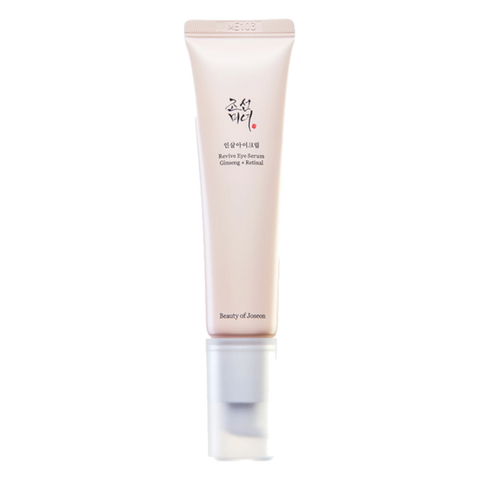
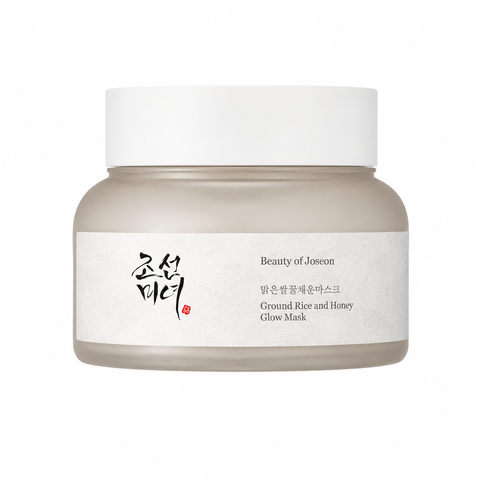
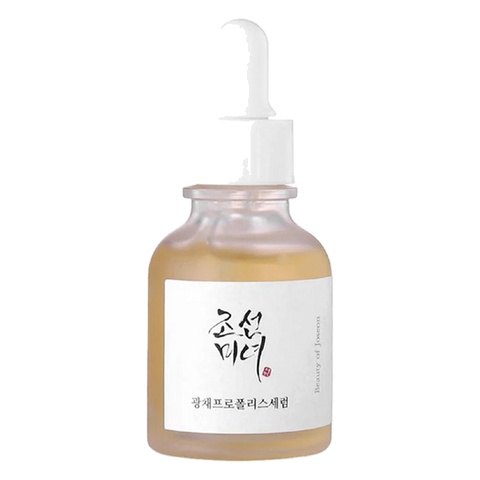
Beauty of Joseon
See all →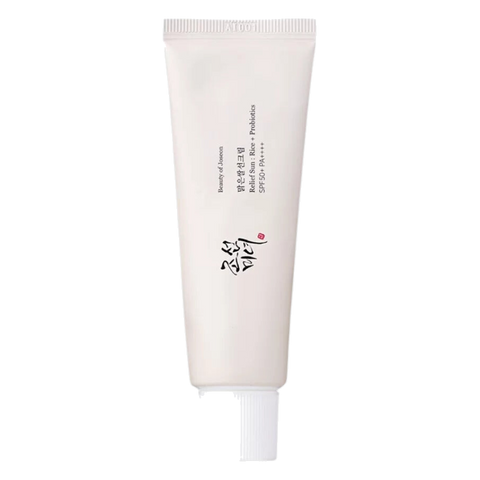
The carton comes off the pallet, you flip a tube over before it goes on the shelf, and the only thing printed on the crimp is 2025.04.18. Sixteen months ago. No EXP, no hourglass, no second date on the tube or the outer box.
The tube is almost certainly fine. April 2025 is when it was filled. What you are holding is a birth certificate, and the shipment left Korea without telling you the day the product stops being sellable.
The short version
- Korean dates run year, month, day, so 26.03.05 means 5 March 2026, not the twenty-sixth of anything.
- Article 19(1)(c) of Regulation (EC) 1223/2009 requires an EU durability date only below 30 months' shelf life; above that, only the period after opening symbol is required.
- A first order of a new SKU should carry at least 24 months to the use-by date on the day it leaves the supplier's warehouse.
The Korean pack tells you when it was made
Article 10 of Korea's Cosmetics Act puts the manufacturing number and "the use-by date or best-before date after opening" on the package, and adds in the same breath that "where the best-before date after opening is stated, the manufacturing date shall also be stated". A Korean manufacturer therefore has a choice: print an end date, or print a period after opening plus the day of manufacture. Much of the K-beauty catalogue takes the second option, which is why so many packs carry a date already in the past and nothing else.
Korean dates run year, month, day, always. So 26.03.05 is the fifth of March 2026, not the twenty-sixth of anything. An eight-digit stamp like 20250418 is the same without separators, and 250418 is the same again. Two dates stacked means manufacture first, use-by second.
The words matter more than the digits. 제조 or 제조일자 marks a manufacturing date. 사용기한 marks a use-by date, and so does a date followed by 까지, which just means "until". 개봉 후 사용기간 is the period after opening, written with a month count, and the labelling rules let a brand show it as text or as the open-jar symbol you already know.
What a European shelf needs instead
Article 19(1)(c) of Regulation (EC) No 1223/2009 asks for the date of minimum durability, preceded by the hourglass symbol from Annex VII or the words "best used before the end of", expressed as month and year, or day, month and year. The requirement switches off above 30 months: a product that keeps longer carries no date at all, only the open-jar symbol with a figure in months.
Two things follow that your supplier will not raise. Article 19(5) puts the durability wording into the language of the country where the product is sold, so "best used before the end of" has to be translated for every market you ship to, while the hourglass symbol does not. If you over-label for more than one country, print the symbol.
The second matters more. Article 6(2) makes you, as a distributor, verify before you sell that "the date of minimum durability specified, where applicable under Article 19(1)(c), has not passed". Read the words "where applicable". On a pack carrying only an open jar there is no date, so nothing to check and no floor on how old the goods may be when they reach you. European law protects the shopper from a product that has already expired. It says nothing about a supplier clearing a warehouse of stock with eight months left. That floor has to come from your purchase order.
The batch code sites do not cover the brands you are buying
The public decoders are the obvious move, and they fail where it hurts. Checked on 1 September 2026, CheckFresh lists COSRX, Anua, Beauty of Joseon, Medicube, Round Lab, SKIN1004 and mixsoon, and every one of those brand pages carries the same line: "Unfortunately, [brand] brand codes are not yet supported." The brands that do decode are the conglomerate ones, Innisfree, Laneige and Missha among them. The indie labels driving European demand right now are the blind spot.
Nobody is about to fill that gap. Article 10 asks for a manufacturing number and says nothing about its format, so every filler builds its own scheme, and no public register turns a Korean lot code into a date. If there is no readable date on the pack, the supplier's own batch record is the only source, which makes it one more line on the document list you send before the money moves.
The decoding table, and the number that goes in the order
| On the pack | Korean | What it is | What you do with it |
|---|---|---|---|
| 제조, 제조일자, MFD, MFG | manufacture | the day the batch was filled | an anchor, never an expiry. Ask for the use-by |
| 사용기한, or a date followed by 까지, or EXP | use-by | last day it should be sold and used | the only date your acceptance rule bites on |
| 개봉 후 사용기간 12개월 | period after opening | 12 months from first opening | a clock that starts in the customer's bathroom |
| open jar symbol with 12M | as above | same thing as a symbol | on an EU pack it also means durability above 30 months |
| 제조번호 plus letters and digits | manufacturing number | the filler's own production reference | required on the pack by Article 19(1)(e). Quote it in claims |
| 20250418, 250418, 25.04.18 | year, month, day, in that order | 18 April 2025. Never read it day first | |
| two dates stacked | manufacture, then use-by | check the second one, not the first |
Now the rule. A first order of a SKU you have not sold before should carry at least 24 months to the use-by date on the day the goods leave the supplier's warehouse. Eighteen months is acceptable on a line whose sell-through you already know. Below twelve months, decline at any discount.
Twenty-four is not a regulatory number, it is arithmetic. Two clocks have to fit inside the remaining life, not one. Say a unit sits six months on your shelf, realistic for anything outside your top twenty in a broad assortment. The customer who buys it opens it and gets a 12-month period after opening she is entitled to use in full. Six plus twelve is eighteen, and the last unit of a batch sells later than the first, so add six months of slack. Change the six for your own turn and the rule moves with you. A buyer who imports the food trade's twelve-month habit into cosmetics is buying stock the customer cannot finish.
Put it in the order, not in an email:
Shelf life and lot identification
- Seller shall not ship any lot with less than 24 months remaining to its use-by date, measured on the date of dispatch.
- Before dispatch, Seller shall provide, per order line: the lot number, the manufacturing date, the use-by date, and the period after opening as printed.
- Where a pack shows no use-by date, Seller shall state the use-by date for that lot from its own batch record, in writing.
- Lots delivered below the agreed remaining life may be returned at Seller's cost, or retained against a credit agreed in writing before the goods are sold.
Point 3 does the work. It converts a manufacturing date into a number you can manage stock against, and no honest Korean exporter has trouble answering it.
When it arrives shorter anyway
Sometimes it will, and refusing the pallet is rarely your best move. Sort it the day it lands, by line and by lot, and take one of three decisions per lot.
Sell it, if the remaining life still covers your turn plus the period after opening. Price it down, but only against a credit you agreed in writing first. A discount negotiated after you accept the goods is a discount you will not get. Or take the short units out of saleable stock entirely and put them on the counter as testers, where a shorter clock is not a defect.
One thing worth a second look. A manufacturing date sitting far further back than the rest of the shipment, on a line the brand still produces, is a lot somebody has been holding. Not illegal, not fake, but a decent hint about where the goods have been, and it belongs with the other signals that tell you which market a batch was packed for.
Questions buyers ask
Do I need to put my own company address on a Korean pack before I sell it?
If you import directly from Korea, you become the responsible person by operation of law under Article 4(5) of Regulation (EC) 1223/2009 the moment the goods land in the EU. Article 19(1)(a) then requires your company name and address on every unit, not the Korean manufacturer's. Buying instead from an EU wholesaler who already imported the stock moves that job to them and leaves you with the lighter distributor checklist in Article 6. Either way, an address label is a separate print run from the date, and it belongs on the pack before the goods reach a shelf.
If I translate the durability wording myself, does that create extra paperwork?
Yes. Article 13(3) treats a distributor who translates any element of the labelling on their own initiative as a notifier, and requires a submission to the European Commission naming the product, the member state of dispatch, the member state where it will be sold, and the distributor's own name and address. Article 4(6) confirms the translation itself does not make you the responsible person, so the two duties stay separate: you notify, but you do not inherit the safety file. A sticker that only translates the durability wording still counts as translating an element of the labelling, so the same rule applies to that one word.
What if I can't find a batch code or date on the pack at all?
Article 19(1)(e) sets the floor: a batch number or identifying reference has to be on the packaging, and it may sit on the outer carton alone if the primary pack is too small to carry it, but it cannot be missing entirely. Check the base of the tube, the crimp, and the underside of the carton before assuming there is nothing there, since Korean fillers routinely print it in a different spot than European brands do. If a unit genuinely carries no batch reference anywhere, that is a labelling gap the responsible person has to close before the stock is sold, not something a retailer can infer from the invoice.
Sources
- Korea Consumer Agency, Cosmetics Act, Act No. 11014 (2011)
- EUR-Lex, Regulation (EC) 1223/2009, consolidated 2026
- Korea Ministry of Government Legislation, Cosmetics Labelling Standards and Methods, 2026
- CheckFresh, brand batch-code decoder pages, checked 2026
Facts checked on 1 September 2026 against EUR-Lex, the Korean Cosmetics Act and the Korean government labelling guidance.
Stock these brands yourself?
Wholesale prices unlock once your trade account is approved. Verification takes one to two working days.
Apply for an accountSee the terms