Costs & terms
What Retailers Get Wrong About K-Beauty Pricing
Matching the cheapest online price for Korean skincare costs a shop its margin and, under the EU 30 day rule, its right to advertise reductions.
Sun Care
See all →Haruharu Wonder
Black Rice Moisture Airyfit Daily Sunscreen SPF50+ PA++++, 50ml
In stock
EAN 8809532221707
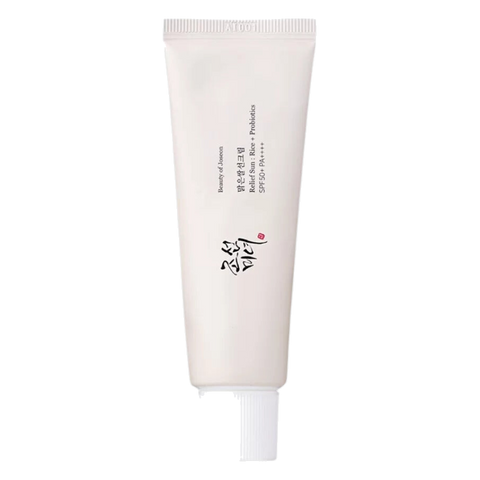
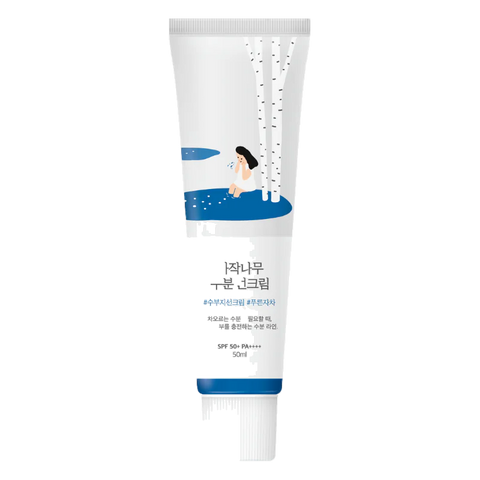

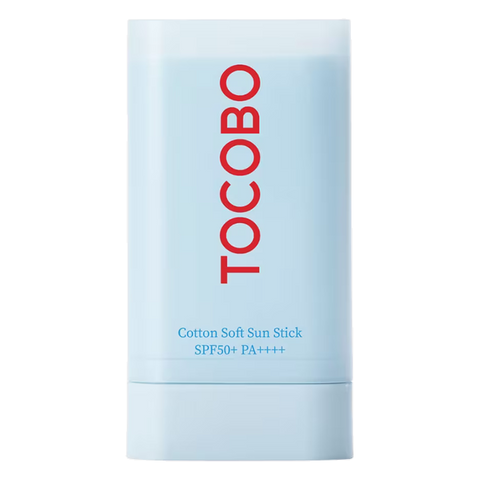
A customer at the till holds up a phone showing the same sunscreen, delivered, for less than the number on your last supplier invoice. Every shop that puts Korean skincare on a shelf has that conversation inside the first month, and the instinct is to move the shelf price toward the phone. We supply European retailers, and the shops that do it are the ones that call a year later asking why nothing moves at full price any more.
Our position: matching the cheapest online price is a losing strategy for a physical shop. It is also the fastest way to lose the right to advertise a discount at all, and that second part carries a fine.
The short version
- Article 6a of Directive 98/6/EC, applicable since 28 May 2022, makes the prior price for any advertised reduction the lowest price charged for that product in that sales channel during the 30 days before, and the percentage has to be worked from that figure.
- Council Regulation (EU) 2026/382 ended the customs duty relief for consignments under 150 euros on 1 July 2026 and charges three euros per item on low value distance sales and postal consignments until 1 July 2028.
- Stock a Korean skincare line only if gross margin at the intended shelf price is at least 40 percent and the repeat interval is under twelve weeks; a line that gets there only at more than about 20 percent above the delivered street price is ordered in single figures.
The recommended price is a recommendation and cannot legally be more
Article 4(a) of the EU vertical block exemption, Regulation (EU) 2022/720, lets a supplier impose a maximum resale price or recommend one. Fixing your resale price or putting a floor under it is a hardcore restriction, and it stays one when it arrives as pressure rather than as a clause. A brand telling you what you have to charge is either mistaken or proposing something that costs it its own exemption. Which also means nobody is going to defend your price for you.
Korean brands set a recommended price for the Korean market. The European figure, where one exists, was usually set by whichever importer listed the line first, and it drifts. The street price on the customer's phone comes from marketplace sellers and from parcels posted straight from Asia, carrying no shelf, no tester, no staff and no European responsible person. Some of it is not the same goods. A price far under every other seller is one of the reliable tells in how to spot grey market and counterfeit K-beauty before you order.
That gap narrowed on 1 July 2026 for the first time in years. Council Regulation (EU) 2026/382 deleted the customs duty relief for consignments under 150 euros and put a duty of three euros per item on low value distance sales and postal consignments in its place, running to 1 July 2028. Three euros on a twelve euro cleanser posted from Seoul lands on the seller you were told you could not compete with. Check the street price again before conceding anything to it.
Permanent discount is a ratchet
Korean skincare is bought on a cycle. A cleanser, a sunscreen, a sheet mask habit and a toner come back every six to ten weeks, which is why the category earns shelf space. It also means the first price a customer paid is the price they expect forever, because they see it again soon enough to remember it. Discount the entry SKU to win one comparison and you have repriced every repeat that follows.
The legal side of that ratchet is less well known. Under EU price indication rules the reference price for an advertised reduction is your own recent low, so every promotion lowers the number you are allowed to strike through next time. Discount continuously and within a season or two the lawful strikethrough price equals the shelf price, at which point no reduction can be advertised at all.
What you may lawfully print next to a lower price
Article 6a of Directive 98/6/EC, inserted by the Omnibus Directive (EU) 2019/2161 and applicable since 28 May 2022, requires any announcement of a price reduction to indicate the prior price, and defines that as the lowest price you applied in a period of not less than 30 days before. Three consequences catch shops out.
The percentage has to be calculated from that number. In Case C-330/23, decided on 26 September 2024, the Court of Justice held that a reduction announced as a percentage, and a promotional statement drawing attention to how good the price is, must both be determined on the basis of the prior price. Printing the 30 day low in small type while working the percentage from a higher figure does not comply.
Each sales channel counts separately. Commission guidance puts the prior price at the lowest applied in that channel or point of sale, and Austria wrote it into the statute: § 9a of the Preisauszeichnungsgesetz requires the lowest price charged at least once within 30 days beforehand "in demselben Vertriebskanal". Your webshop's promotion history does not set the reference price on your shop floor, and does not excuse it either.
A recommended price comparison is a different animal. Commission guidance puts it outside Article 6a and inside the unfair commercial practices rules, which permit it only where the recommendation is genuine, current, and actually made by that brand for that product in your market. Striking through an RRP that nobody in Europe charges is the mistake we see most often, and the one a competitor notices first.
Enforcement is national. In Germany § 11 PAngV carries the 30 day rule, a breach of § 11(1) is an administrative offence under § 20 PAngV, and § 3(2) of the Wirtschaftsstrafgesetz 1954 puts the ceiling at 25,000 euros, though the first letter usually comes from a competitor or a trade association, with costs, long before an authority appears. Austria fines up to 10,000 euros under § 15 PrAG, 15,000 for a repeat. Do not count on the short shelf life exemption when clearing a dated line: Austria's § 9a(3) ties it to a food best before date.
Levers that do not burn your reference price
A member price does not reset your 30 day low, because Commission guidance keeps genuinely individual loyalty discounts outside Article 6a. That exemption disappears the moment the member price is what everybody pays, so keep the tier earned. Make it a standing percentage rather than a points balance, for the reason set out in why points as currency destroys beauty retail margin.
Sell the unit nobody can price check. A four step routine at a set basket price, or a size the marketplaces do not list, is not comparable on a phone in ten seconds. Depth in a few brands beats a thin spread across many, the same argument as how much stock a new K-beauty store actually needs on day one. Testers and knowing which sunscreen suits which skin are levers the parcel seller cannot copy at any price.
The pricing sheet
Four numbers per SKU. Fill them in before the line goes on a shelf, not after.
| # | Number | How to get it |
|---|---|---|
| 1 | Landed unit cost, net | Invoice price plus this SKU's share of freight, duty and compliance, excluding VAT |
| 2 | Shelf price, net and gross | Gross margin = (net shelf price minus landed cost) divided by net shelf price |
| 3 | Delivered street price, gross | Cheapest total a customer in your city can pay today including shipping, from a seller who will still exist next month. Write the date next to it |
| 4 | Repeat interval, weeks | How often a customer rebuys this exact SKU. Estimate it, then correct it from your own till data after two quarters |
The stocking rule we use: take the line if gross margin at your intended shelf price is at least 40 percent and the repeat interval is under twelve weeks. If margin clears 40 percent only at a shelf price more than about 20 percent above the delivered street price, it is a display piece rather than a stock line, and it should be ordered in single figures.
The discount rule, in one sentence for the wall: advertise a reduction only if the new price is below the lowest price you charged for that SKU in that channel in the last 30 days, print exactly that 30 day low as the previous price, and work any percentage from it. A comparison against a brand's recommended price is a separate claim, allowed only while that recommendation is real and current, and never dressed up as your own reduction.
Keep a dated price log per SKU per channel. SKU, channel, date, gross price. It is the only thing that proves a strikethrough was lawful when somebody asks.
Questions buyers ask
Do I have to show a previous price if I just lower the shelf price?
No. Article 6a bites on the announcement of a reduction, and the Commission's 2021 guidance says it does not restrict price decreases that are not announced as one. A quietly relabelled shelf price needs no prior price next to it. The moment a strikethrough, a percentage, a "was" or a sale sign appears, the 30 day low has to be printed, so log the quiet change anyway, because that new figure is the reference for the next promotion.
Can I run buy two get one free without breaking the 30 day rule?
Yes. The Commission's 2021 guidance puts combined or tied conditional offers such as "buy one, get two" or "30 percent off when buying three" outside Article 6a, so no prior price has to be printed. The offer stays subject to the unfair commercial practices rules, which means the condition has to be as legible as the saving. It also lowers the unit price a customer remembers, so run it on a bundle or a size rather than on the entry SKU.
Does the 30 day rule apply to a product I only put on the shelf last week?
Article 6a(4) lets a member state set a shorter reference period for goods on the market for less than 30 days. Germany did not take it up: § 11 PAngV carries the plain 30 day rule and excepts only individual reductions and perishable goods, so a reduction announced on a ten day old line has nothing solid to be measured against. Sell a new SKU at its intended shelf price for 30 days before the first advertised reduction, and make any launch offer a tied one instead.
Sources
- EUR-Lex, Directive (EU) 2019/2161, 2019
- EUR-Lex, Commission guidance on Article 6a of Directive 98/6/EC, 2021
- Court of Justice of the European Union, Case C-330/23, 2024
- EUR-Lex, Regulation (EU) 2022/720, 2022
- EUR-Lex, Council Regulation (EU) 2026/382, 2026
- Bundesministerium der Justiz, Preisangabenverordnung § 11, 2022
Facts checked on 1 September 2026 against EUR-Lex, the Court of Justice, the German Preisangabenverordnung and Wirtschaftsstrafgesetz, and the Austrian legal information system.
Stock these brands yourself?
Wholesale prices unlock once your trade account is approved. Verification takes one to two working days.
Apply for an accountSee the terms