Pharmacies
What You Can Legally Claim About Skincare at the Counter
EU cosmetic claims must be true, evidenced and free of disease language under Regulation 655/2013; Korean whitening, acne and healing copy needs rewording.
Creams
See all →
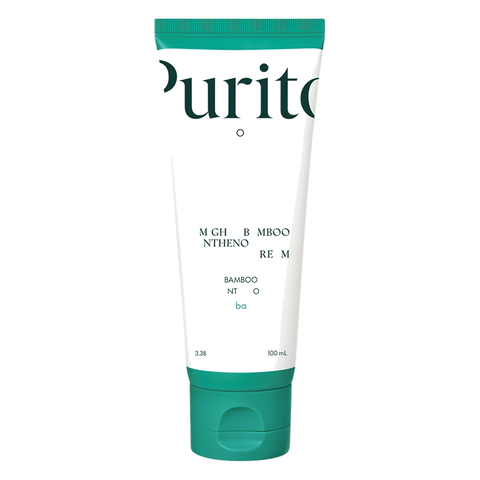
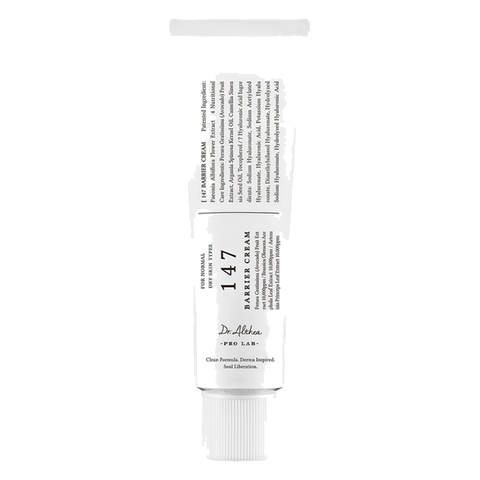

A customer holds up a cica cream and asks whether it will clear her acne. The Korean box calls it a functional cosmetic, the brand's Instagram says "treats breakouts", and the supplier's sales deck used the word "healing" four times. Whatever you say next is a claim under Article 20 of Regulation (EC) No 1223/2009, and "yes" is the one answer you cannot give.
Article 20(1) covers labelling, making available on the market and advertising, and it forbids text, names, trade marks, pictures or other signs that imply a characteristic or function the product does not have. The shelf card, the caption, the leaflet and the sentence you say across the counter all sit inside that article, whoever wrote the words.
The short version
- Regulation (EU) No 655/2013, applied since 11 July 2013, requires every claim on a cosmetic sold in the EU, explicit or implicit, to be supported by adequate and verifiable evidence, and makes the Responsible Person answerable for the wording.
- A skincare product presented as treating or preventing a disease, acne, eczema and hair loss included, is a medicinal product by presentation under Article 1(2) of Directive 2001/83/EC, whatever its formula.
- Under Annex III of the European Commission's Technical Document on cosmetic claims, applied since 1 July 2019, "free from parabens" and similar claims that denigrate a legally used ingredient are not acceptable on EU cosmetics.
The six tests every claim has to pass
The Annex to Regulation (EU) No 655/2013 lists six common criteria: legal compliance, truthfulness, evidential support, honesty, fairness and informed decision-making. Article 2 puts the duty on the Responsible Person, so the importer or the brand's EU firm answers for the wording on the pack, and the yardstick throughout is the average end user, "who is reasonably well-informed and reasonably observant and circumspect".
Three of the six do the real work at a retail counter.
Evidential support: claims, explicit or implicit, "shall be supported by adequate and verifiable evidence". Implicit covers the photo of the dermatologist, the before-and-after picture and the word "clinical" in a lab-report font. Article 11 of Regulation 1223/2009 says where the evidence lives: the product information file must hold proof of the effect claimed, for ten years after the last batch was placed on the market. If a compliance firm assembled that file without ever receiving the brand's efficacy study, the pack still says what it says, but nobody in the EU can back it up.
Honesty: presentations of performance "shall not go beyond the available supporting evidence". A 28-day study becomes "skin looks firmer after four weeks", never "reverses ageing".
Fairness: claims "shall not denigrate the competitors, nor shall they denigrate ingredients legally used". This is the one retailers break without noticing, because "free from parabens" reads as reassurance to a shop owner and reads as an attack on a permitted preservative to an inspector.
Truthfulness catches a quieter error: an ingredient claim must not imply the finished product has the ingredient's properties when it does not. A toner with a trace of niacinamide has not inherited niacinamide's evidence.
When the Commission reported to Parliament in COM(2016) 580, 21 member states had checked 38,995 claims across 2014 and 2015 and found 10 % non compliant, with "free from" and "hypoallergenic" the recurring failures. Annexes III and IV of the Technical Document, applied since 1 July 2019, are the response.
Where a cosmetic ends and a medicine begins
Article 2(1)(a) of Regulation 1223/2009 defines a cosmetic by purpose: cleaning, perfuming, changing appearance, protecting, keeping in good condition or correcting body odours. Directive 2001/83/EC defines a medicinal product two ways, by function and by presentation, and presentation is the trap. A product presented as treating or preventing disease is a medicine in the eyes of the law before anyone has looked at the formula. The word does the reclassifying.
So the borderline at the counter runs through vocabulary, and the working rule is: describe the customer, never the cure. "For blemish-prone skin" describes who it is for; "treats acne" describes a therapy. "Helps skin look more even" is appearance; "fades melasma" is a diagnosis. "Reduces breakage, hair looks fuller" is condition; "stops hair loss" is a treatment for alopecia. "Soothes" and "calms" are cosmetic; "anti-inflammatory" names a pharmacological action and belongs on a medicine.
We see pharmacies hit this hardest, because the staff are trained to talk about conditions and the customers arrive with one. The pack requirements that make Korean skincare sellable in an EU pharmacy are settled before the goods arrive; the claims risk lives in the conversation and on the shelf card beside it. "Medical grade" and "pharmacy strength" lean toward presentation too, and the K-beauty lines that fit a pharmacy earn that shelf through ingredient transparency and testing on file, not borrowed clinical language.
Korean copy that cannot cross the border as written
Korea's Cosmetics Act has a category the EU does not: functional cosmetics. Products for whitening, wrinkle improvement, UV protection, hair loss relief and acne-prone skin go through a safety and efficacy examination by the Ministry of Food and Drug Safety before sale, and the pack then carries the functional designation as a regulated mark of approval. In Europe there is no such mark. "Whitening functional cosmetic" arrives as a bare claim that has to satisfy the six criteria on its own, and "whitening" points straight at pigmentation as a condition, the medicinal border again.
The MFDS dossier behind that designation is useful only if it reaches the EU file. A supplier who cannot produce the efficacy data behind a functional claim usually cannot produce most of the documents you should see before stocking either.
Everyday brand copy is the larger problem by volume. It was written for Korean shoppers or for a global English audience, and it gets copied onto European shelf cards by staff who assume the brand checked it. The brand checked it for Korea.
The counter claims card
Print this, one copy by the till and one next to the social media login. Three questions before any claim goes on a card, a caption or out of your mouth:
- Does it name a disease, a symptom or a treatment (acne, eczema, hair loss, healing, anti-inflammatory)? Drop it; rewording will not help if the customer would still hear a cure.
- Has the Responsible Person confirmed in writing that evidence for this exact wording is in the product information file? If not, use the descriptive version in the right-hand column.
- Does it put down an ingredient or a competitor ("free from", "no nasties", "unlike ordinary creams")? Drop it, regardless of evidence.
| Copy you will meet | Say this instead |
|---|---|
| Treats acne, anti-acne, acne care | For blemish-prone skin |
| Heals, repairs, regenerates skin | Supports the skin's moisture barrier |
| Anti-inflammatory | Soothing, calming |
| Whitening | Brightening, helps even the look of skin tone (evidence on file) |
| Prevents hair loss, regrows hair | Reduces breakage, hair looks fuller (evidence on file) |
| Free from parabens, chemical-free, 10-free | Say what it contains; drop the "free from" |
| Hypoallergenic | Only with the Annex IV evidence, never as a promise of no reaction |
| Clinically proven, dermatologist tested | Only with the test report, stating the result the test actually showed |
| Medical grade, pharmacy strength | Nothing; these words describe a medicine |
And the email that fills the right-hand column with facts:
Subject: Claim substantiation, [product name]
Please send the list of claims for which the EU Responsible Person holds evidence in the product information file under Article 11 of Regulation (EC) No 1223/2009, in the wording approved for the EU market. Please also confirm in writing whether the MFDS functional cosmetic dossier for this product forms part of that file. We will use only the claims that appear on your list.
Questions buyers ask
Can I write "dermatologically tested" on my shelf card?
Only if the test exists and the Responsible Person can send you the report or confirm it in writing. "Tested" says a dermatologist supervised a test and nothing about the result, and under the honesty criterion of Regulation (EU) No 655/2013 your card cannot imply the product was approved or recommended. If the brand has the phrase but no protocol, leave it off.
Who is liable if a claim on the pack is wrong, me or the supplier?
Article 2 of Regulation (EU) No 655/2013 makes the Responsible Person answerable for the wording on the pack, so the importer or the brand's EU firm carries that. Anything you add yourself, a shelf card, a caption, a leaflet or a sentence at the counter, is your advertising under Article 20 of Regulation (EC) No 1223/2009 and national unfair commercial practice rules. Keep your own words inside the list the Responsible Person has evidence for.
Is "hypoallergenic" a legal claim in the EU?
Permitted, with conditions. Annex IV of the Commission's Technical Document, applied since 1 July 2019, accepts it only where the product was designed to minimise allergenic potential and the Responsible Person holds the evidence, and never as a guarantee that nobody will react. The 2016 Commission report named it one of the two most frequently non compliant claims, so expect an inspector to ask for the file.
Sources
- EUR-Lex, Commission Regulation (EU) No 655/2013 on common criteria for cosmetic claims, 2013
- EUR-Lex, Regulation (EC) No 1223/2009 on cosmetic products, 2009
- European Commission, Technical document on cosmetic claims, DocsRoom 24847, 2017
- EUR-Lex, COM(2016) 580, report on product claims made based on common criteria in the field of cosmetics, 2016
Regulation texts and dates above were checked against EUR-Lex and the Commission's published claims guidance on 2 September 2026. This is general information on how EU claims rules apply at retail, not legal advice; a specific claim should be cleared with the Responsible Person or your national competent authority.
Stock these brands yourself?
Wholesale prices unlock once your trade account is approved. Verification takes one to two working days.
Apply for an accountSee the terms